Crankshaft Fatigue Analysis
Relation: Ellwood Crankshaft Group
Role: Metallurgy Intern
Skills: CAD (SolidWorks), FEA (Ansys Mechanical), Excel, Resonance Fatigue Tester, M53 IC standard, Fatigue Understanding, Verification, Literature Review
Timeline: May 2026 - July 2026
Background:
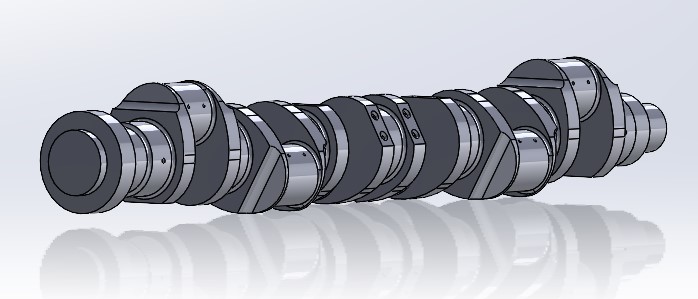
A customer requesting a new crankshaft that Ellwood had not previously produced brought forward an inquiry to manufacture the product. The only data provided were the engineering drawings of the crankshaft, along with basic material grade properties and mechanical property requirements.
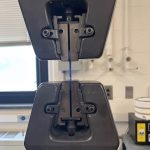
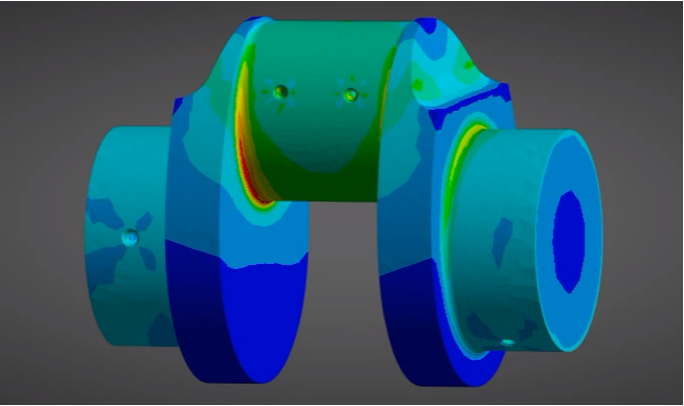
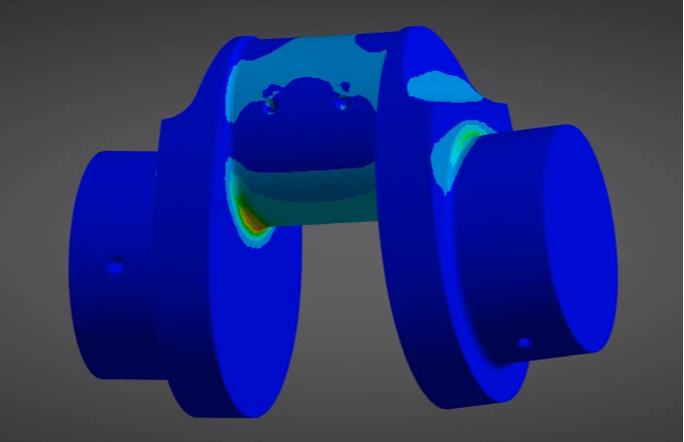
The traditional method of verifying the customer's crankshaft mechanical properties, resonance fatigue testing, was considered too costly for this inquiry without further information. I was put in charge of manually computing and simulating the crankshaft's bending and torsional moments in FEA to provide more certainty before moving forward with the customer and all future orders.
Direct Contributions:
● Created a calculator that computes nominal/equivalent alternating stress and fatigue strength limits using the M53 IC standard
● Created an S-N curve calculator that utilizes the notched fatigue model: the modified goodman to calculate the fatigue life to use in Ansys
● Made a detailed SolidWorks model of full customer crankshaft
● Calculated tangential and radial forces using the engine specs
● Verified FEA simulation by replicating two previous crankshafts to resonance fatigue testing data.
● Researched literature to develop a ratio for the torsional and bending moments if the material is induction hardened or IH + peened.
Outcomes:
I created a reusable system for verifying customers' mechanical property requirements through FEA, allowing ECG to reduce costs associated with the trial-and-error process of resonance fatigue testing.